Home Browse: Start (1) Browse: Previous (3) Browse: Next (5) Shop: Liguria, Wine region
Reading: 7 minutes | Listen to podcast: ()
Story: Liguria | Wine region
Page: 4/5
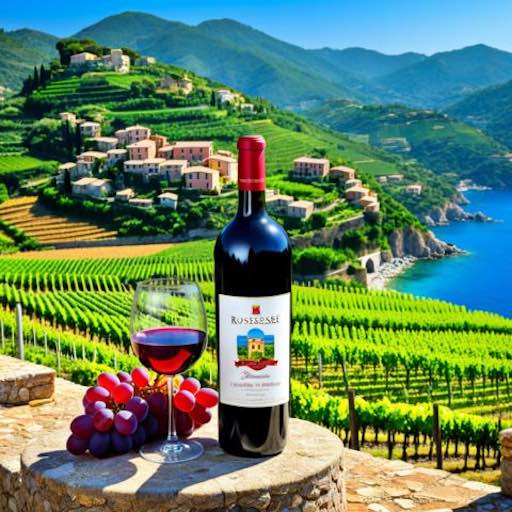
Liguria—often associated with the sea, steep coastlines, and the scent of the ocean and herbs—is best known in the wine world for its white wines. But the red wines of this narrow coastal region have also developed their own unique character. On rugged slopes above the sea, vines with roots in ancient traditions grow and produce wines that combine lightness, minerality, and Mediterranean spirit.
The main grape variety: Rossese - Liguria's red identity
The most important red grape in Liguria is called Rossese, and the wine made from it is a typical symbol of the region. The renowned Rossese di Dolceacqua DOC, which has been Liguria's first DOC designation since 1972, is produced almost exclusively from Rossese grapes. Rossese wines usually have a lighter ruby red color, which can turn garnet red over time. They are characterized by delicate, fine-grained tannins, lively acidity, and a bouquet of red berries, a hint of herbal spice, and Mediterranean freshness — not a heavy southern Italian wine, but an elegant, light, and often surprisingly delicate red wine that prefers to steer clear of the loud ones. Rossese thrives particularly well due to the climatic conditions — steep, limestone-rich slopes near the sea, a Mediterranean climate with sea breezes. The terroir, characterized by mineral soil and proximity to the sea, gives the wine its typical freshness and fine minerality, which make it unmistakable.
Other red grape varieties: diversity on a small scale
Although Rossese is the flagship variety, there are other red grapes in Liguria, albeit mostly less widespread. One example is Ormeasco (a local variant of Dolcetto), which is cultivated in parts of the region—it produces wines with a slightly stronger body and often a little more structure, but still within the framework of a Mediterranean, rather light style. In addition, there are sometimes cuvées made from international or lesser-known grape varieties — where winemakers experiment or where geographical conditions differ from classic sites. These wines show that, despite its small wine-growing area, Liguria has a certain stylistic spectrum, ranging from delicate, elegant reds to slightly more powerful varieties.
The style of Ligurian red wines: Mediterranean, light, and aromatic
Red wines from Liguria differ significantly from the heavy, tannin-rich reds of some southern regions of Italy. They are leaner, more elegant, with high acidity, often fine herbal or marine notes, and a mineral freshness reminiscent of the sea—a type of wine that deliberately combines lightness with character. These wines are well suited for early enjoyment, pair excellently with regional cuisine featuring fish, seafood, or Mediterranean antipasti, and are also ideal as uncomplicated accompaniments to light summer dishes. Their subtle aromatics, the interplay of fruit, herbal spices, and sea breeze make them ideal for situations where you don't want a heavy, concentrated red wine, but something fresh and delicate — very much in keeping with the Ligurian way of life.
A highlight of the region: Rossese di Dolceacqua
If you want to experience Liguria with a red wine, there is hardly any way around Rossese di Dolceacqua. This wine embodies the terroir, history, and character of the region like no other. It represents a wine tradition that is more subtle than opulent, and a style that combines elegance and Mediterranean lightness with heritage and a connection to the land. Its delicate fruit, fresh acidity, and subtle mineral and herbal notes make it a true Ligurian specialty—a red wine that surprises and leaves you wanting more. So if you want to discover northern Italy — not with voluminous Super Tuscans, but with wines that let you taste the origin, landscape, and culture — Liguria's Rossese di Dolceacqua is the ideal place to start.
Why Liguria is fascinating as a red wine region
Liguria proves that viticulture doesn't only work in large, fertile plains — but also on steep slopes, close to the sea, with calcareous soils and laborious work. The red wines of this region are an expression of a special terroir, small-scale, artisanal production, and a style that combines Mediterranean freshness with elegance. For wine lovers looking for light, original red wines full of character, Liguria is definitely worth discovering. - Gerardo [TS12/25]
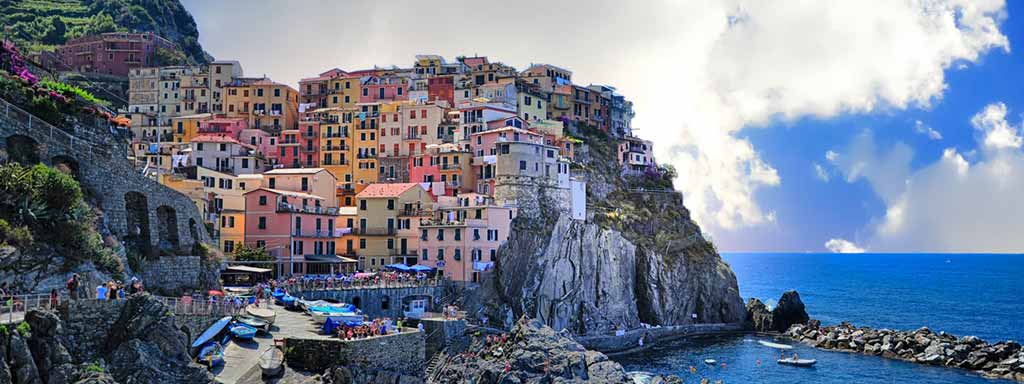
| Name | Liguria | |||||||||||||||||||||||||||||||||||||||||||||||||||||||||||||||||||||||||||||||||||||||||||||||||
| Category | Wine Region | |||||||||||||||||||||||||||||||||||||||||||||||||||||||||||||||||||||||||||||||||||||||||||||||||
| Vineyard Area (Hectare) | 1.500 | |||||||||||||||||||||||||||||||||||||||||||||||||||||||||||||||||||||||||||||||||||||||||||||||||
| Grape Varieties | Sangiovese, Ormeasco, Ciliegiolo, Granaccia, Vermentino, Pigato, Trebbiano | |||||||||||||||||||||||||||||||||||||||||||||||||||||||||||||||||||||||||||||||||||||||||||||||||
| Capital | Genua | |||||||||||||||||||||||||||||||||||||||||||||||||||||||||||||||||||||||||||||||||||||||||||||||||