Story: San Martino | Sardegna

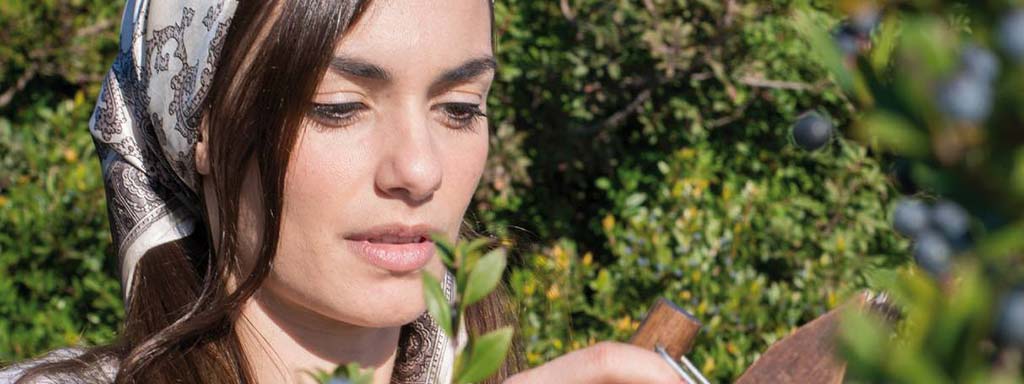
The Sardinian Mediterranean scrub is rich in plants such as mastic, rosemary, strawberry tree and, above all, myrtle - so abundant that it is said: “Sardinia smells of myrtle!”. Mirto (Myrtus communis) is an evergreen, wild-growing shrub (Myrtaceae family) that reaches a height of around 3 meters and has leathery, lanceolate green leaves. Its white, five-petaled flowers appear from May to August and exude an intense, aromatic fragrance. The small, fleshy myrtle berries are brown-purple and taste sour and aromatic; they ripen from the end of November to January. Fresh myrtle berries are edible and traditionally used to flavor dishes, but today they are mainly used to make the famous Mirto liqueur.
Company history
San Martino Srl was founded in 1987 by Maria Antonietta and Alessandro Meloni and is known as an artisan liqueur manufacturer that has focused on quality and authenticity from the very beginning. The first products included classic specialties such as Mirto Rosso, Mirto Bianco, Limoncello and the typical Sardinian bitter Filu'e Ferru. Under the leadership of the founding family, the company quickly grew into a major production facility serving both the regional tourist market and sales on the Italian mainland and abroad.
Corporate philosophy
The pleasure of good drinking is at the heart of San Martino's corporate philosophy. The aim is to capture the intense, natural taste of Sardinia in every bottle, which is why all the raw materials used are selected with particular care. The company combines tradition with innovation and strives to live in harmony with nature and the environment.
Production of Mirto liqueur
Mirto liqueur is produced at San Martino using traditional methods. In December, when the myrtle berries are fully ripe, experienced pickers collect the berries directly from the bushes using special combs. After a strict quality control, the berries are placed in stainless steel containers and completely doused with alcohol - the so-called infusion. In March, an intense red-purple extract is obtained, which has a characteristic, spicy and aromatic taste. From this extract and the addition of alcohol, water and sugar, the finished Mirto liqueur is created, preserving the natural characteristics and local tradition.
Mirto Rosso
Mirto Rosso is the classic form of Mirto liqueur, made from the ripe dark berries of Myrtus communis. These thrive particularly well in the mild climate of Sardinia and thus contribute to the unique quality of the liqueur. Even in ancient times, myrtle was considered a plant sacred to Venus, a symbol of love and beauty. After careful harvesting and long maceration, a deep red, intense liqueur with an unmistakable aroma and strong taste is produced. Tradition, passion and the highest quality characterize the production: the careful selection of wild berries gives Mirto Rosso its characteristic taste profile.
Mirto Bianco
Mirto Bianco (white mirto) is a somewhat lesser-known variant of myrto liqueur, but it is very pleasant and aromatic. Unlike Mirto Rosso, it is not made from the berries but from the fresh leaves of the Mirto, which are collected by hand in early summer. The finished liqueur is characterized by a fine bouquet and a pleasantly dry, slightly tart finish.
Mirto Nero (Oronero Sardo)
Mirto Nero (San Martino markets it as Oronero Sardo) is a particularly intense specialty with a high proportion of black myrtle berries. It embodies the purity, rarity and integrity of these wild, black-violet myrtle fruits. The particularly concentrated selection of hand-picked black berries results in a liqueur with a very dark color, unique aroma and exceptionally deep taste. The Oronero Sardo combines San Martino's long-standing tradition and passion and emphasizes the quality of the berries used. - Gerardo [TS06/25]
 © www.mirtosanmartino.it
| Name | San Martino | |||||||||||||||||||||||||||||||||||||||||||||||||||||||||||||||||||||||||||||||||||||||||||||||||
| Category | Sardegna | |||||||||||||||||||||||||||||||||||||||||||||||||||||||||||||||||||||||||||||||||||||||||||||||||
| Cultivation | Conventional | |||||||||||||||||||||||||||||||||||||||||||||||||||||||||||||||||||||||||||||||||||||||||||||||||
 |
Mirto Rosso dalla Sardegna, San MartinoSan Martino, Sardegna € 15,95 22,79 €/L | |||||||||||||||||||||||||||||||||||||||||||||||||||||||||||||||||||||||||||||||||||||||||||||||||