Home Browse: Start (1) Browse: Previous (2) Browse: Next (4) Shop: Emilia-Romagna, Wine region
Reading: 7 minutes | Listen to podcast: ()
Story: Emilia-Romagna | Wine region
Page: 3/5
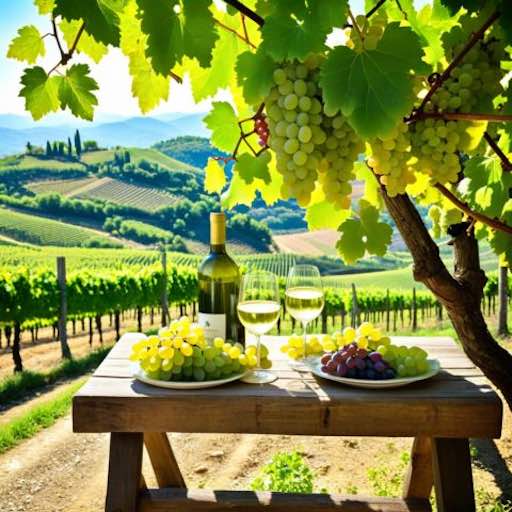
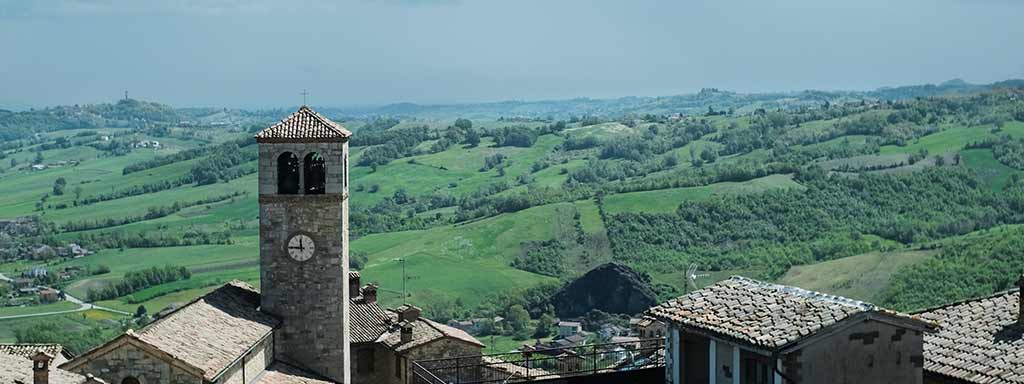
Emilia-Romagna, often associated with Lambrusco and full-bodied red wines, is home to a diverse range of white wines. Between rolling hills, fertile plains, and the Adriatic Sea, vines grow that express the terroir of this region in a special way. The white wines of this region are not only fresh accompaniments to the famous dishes of the Food Valley, but also tell the story of ancient, local grape varieties that have stood the test of time for centuries.
Albana di Romagna: The glorious indigenous grape
An outstanding white grape from Emilia-Romagna is Albana, which gave the Romagna region its first DOCG wine. Albana di Romagna is mainly grown on the hills between Bologna, Forlì, and Ravenna, and the wines made from it have remarkable depth and complexity. In its dry form, it combines powerful aromas with freshness, while the sweet Passito versions captivate with their rich notes of dried fruit and honey. This wine reflects the warmth and altitude of the vineyards and is considered an elegant expression of a very old grape variety.
Pignoletto: Freshness, effervescence, and structure
Pignoletto is a grape variety that thrives in the hills of Bologna. It is used to produce both still and sparkling wines, which, depending on the vinification process, can have a gentle effervescence. In its sparkling version, Pignoletto is lively, with floral notes and citrus aromas, while the still versions have a slightly more pronounced structure and a slightly bitter finish. This subtle bitterness gives the wine its own personality, which many perceive as characteristic of this traditional indigenous grape.
Trebbiano Romagnolo: The versatile classic
Trebbiano Romagnolo is one of the most widespread white grape varieties in Emilia-Romagna. This grape grows in large quantities in the plains and hills around Ravenna and is often used to make accessible, fresh white wines. The wines produced from it have a straw-yellow color, moderate acidity, and a certain lightness that makes them ideal companions for everyday enjoyment. In special versions, Trebbiano is also processed into sparkling or semi-sparkling wines or used for distillation.
Malvasia di Candia Aromatica and Moscato Bianco: Fragrance and playfulness
Among the most aromatic white varieties in the region are Malvasia di Candia Aromatica and Moscato Bianco, both of which offer hints of peach, apricot, and fragrant flowers. In Emilia-Romagna, they produce both dry and sparkling white wines, often with a certain sweetness when lightly sparkling or made using traditional methods. These wines are particularly lively, slightly exotic, and ideal for moments when you want to treat yourself to something more playful and aromatically striking.
International influences: Chardonnay, Sauvignon, and more
In addition to the typical regional grape varieties, there is also a growing number of international white grape varieties in Emilia-Romagna. Chardonnay, Sauvignon Blanc, Pinot Bianco, and Pinot Grigio are mainly cultivated in the hilly growing areas, often in DOC wines from the Colli Bolognesi. These varieties allow winemakers to combine modern, international styles with the typical Emilia character: freshness, clarity, and structure.
Regional specialty: Pignoletto DOCG and Frizzante
A real highlight among the white wines of Emilia-Romagna is Colli Bolognesi Pignoletto DOCG, which is produced in still, frizzante, or classic spumante versions. The lightly sparkling version is particularly popular and is appreciated as a refreshing aperitif wine thanks to its citrus and floral notes, paired with a fine, lively perlage. This Pignoletto is considered a true specialty of the region—lively, authentic, and elegant at the same time.
Conclusion: Discover the white wine side of Food Valley
The white wines of Emilia-Romagna may not be as widely known as the famous reds or Lambrusco, but they deserve attention and respect. Albana, Pignoletto, Trebbiano, Malvasia, and Moscato—each grape variety brings out a different facet: from full-bodied depth to floral lightness to sparkling freshness. The region thus demonstrates that white wine is not just a complement, but an independent, vibrant part of its wine tradition. So if you want to discover the bright side of the Emilia-Romagna terroir, you'll find it here - and you'll be surprised at how much character there is in the glass. - Gerardo [TS12/25]
| Name | Emilia-Romagna | |||||||||||||||||||||||||||||||||||||||||||||||||||||||||||||||||||||||||||||||||||||||||||||||||
| Category | Wine Region | |||||||||||||||||||||||||||||||||||||||||||||||||||||||||||||||||||||||||||||||||||||||||||||||||
| Vineyard Area (Hectare) | 58.000 | |||||||||||||||||||||||||||||||||||||||||||||||||||||||||||||||||||||||||||||||||||||||||||||||||
| Grape Varieties | Lambrusco, Sangiovese, Barbera, Bonarda, Trebbiano, Malvasia, Moscato, Sauvignon | |||||||||||||||||||||||||||||||||||||||||||||||||||||||||||||||||||||||||||||||||||||||||||||||||
| Capital | Bologna | |||||||||||||||||||||||||||||||||||||||||||||||||||||||||||||||||||||||||||||||||||||||||||||||||