
 Veneto | Wine region
|
Veneto | Wine region
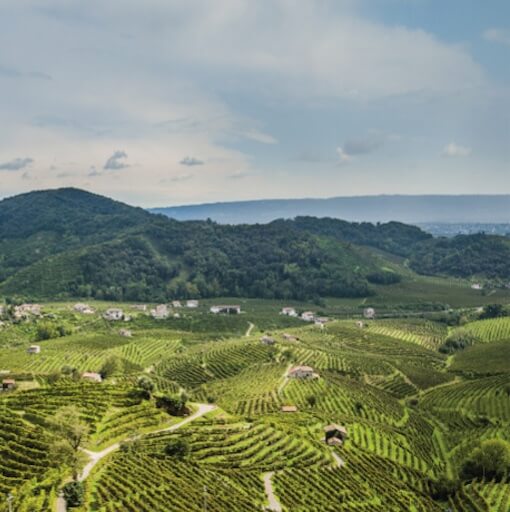
Veneto is a wine region in northern Italy known for its first-class wines. The region is known for its mild climate and hilly landscape, which provides an ideal environment for viticulture. Vineyards in Veneto cover an area of more than 70,000 hectares and produce a wide variety of wines.
The climate in Veneto is mild with warm summers and cool winters. Winemakers in the region benefit from the stable weather and long hours of sunshine, which allow the grapes to fully ripen. The soil in Veneto is very diverse, ranging from chalky soils in the hills to sandy soils on the plains.
The main grape varieties grown in Veneto are Garganega, Corvina, Rondinella, and Merlot. Garganega is the main grape variety in Soave, one of the most famous white wines from Veneto. Corvina and Rondinella are used in the production of Valpolicella, one of the most famous red wines of the region. Merlot is often used in the production of red wine in Veneto and is often found in cuvees with other grape varieties.
The most important wines from Veneto are Prosecco, Soave and Valpolicella. Prosecco is a fresh, fruity sparkling wine made from the Glera grape. It is known for its fine perlage and light, refreshing style. Soave is a white wine made mainly from the Garganega grape. It has a pale color and a light, refreshing aroma with notes of green apple and citrus.
Valpolicella is a red wine made from the Corvina and Rondinella grapes. It has a strong red color and an intense aroma of cherries and spices. There is also a special version of Valpolicella called Amarone, made from the same grapes but through a special production process. Amarone is a full-bodied and complex wine with a strong flavor of berries and spices.
Veneto also has a variety of other wines, including Bardolino, Cabernet Franc and Pinot Grigio. Bardolino is a light and fruity red wine made from Corvina, Rondinella and Molinara grapes. Cabernet Franc is often used in the production of so-called Bordeaux blends and Pinot Grigio is a dry and fresh white wine often served as an aperitif. - Gerardo [TS05/23]
Classic: Soave Classic: Prosecco Classic: Ripasso Classic: Amarone

Classic: Soave Classic: Prosecco Classic: Ripasso Classic: Amarone


Veneto | Wine region | Buy at Gerardo
Veneto stretches from the Alps to the Adriatic Sea, bordering Trentino-Alto Adige to the north, Austria and Friuli Venezia Giulia to the east, Lombardy to the west and Emilia-Romagna to the south. In terms of landscape, the wine region consists of two very different zones: a plain formed by the alluvial soil of the rivers and ending at the Adriatic Sea with the particular delta and lagoon formation of the Po River, and the mountains with a pre-alpine and an alpine part. The good water supply allows a strong agricultural use with cultivation of wheat, corn, rice, sugar beets, tobacco, fruits and vegetables, olives and vines.
Viticulture is concentrated in the hills of Verona up to Lake Garda, with world-renowned production areas such as Soave and Valpolicella, the Colli Berici and Colli Euganei in the province of Vicenza, Breganze in the hills of Vicenza between the Brenta and Astico rivers, the Gerölle plain along the Piave river and the hills of Conegliano-Valdobbiadene, where the Prosecco vines grow for Italy's current in-wine. With almost 20% of the Italian production of wines with designation of origin, Veneto thus ranks first among the regions of Italy. In another area, this region is a leader: in wine exports to Germany, it is the undisputed leader.
Veneto, one of the largest and most important wine-growing and certainly the most important wine-trading region in Italy, must be viewed with both a laughing and a crying eye. Commercial success, such as that of the trading companies around Verona or that of wines like Soave, Valpolicella and Bardolino, has not been achieved in recent decades by any other Italian region except Chianti and Nero d'Avola.
But success, as we all know, often makes you blind. And this is probably the only explanation for the fact that the trading houses, cooperatives and winegrowers between Venice and Lake Garda have thoroughly slept through the trend toward forced quality winegrowing, as seen in Tuscany and Piedmont, Friuli and South Tyrol.
Apart from personalities such as Maculan, Anselmi, Masi or Pieropan, who sensed and anticipated the new development decades ago, viticulture in the region has only recently realized that the future really lies in class and not in mass. As a result, 200-300 quintals are still harvested from the vines on the plains around Verona and Vicenza - it may well be a bit more! But the efforts to improve the tattered image with high-quality products are unmistakable.
Purists may criticize the use of grape varieties other than the native ones, the sudden appearance of Chardonnay in Soave and Cabernet in Valpolicella. It has always been good for the quality of the wine, and what the young generation can show today can also convince on the international stage.
- Gerardo [TS05/23]