
 Marche | Wine region
|
Marche | Wine region
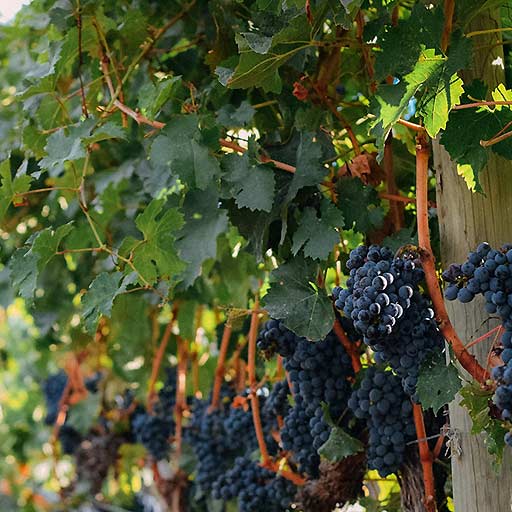
On the Adriatic Sea in the south of Emilia-Romagna and in the east of Tuscany and Umbria stretches the Marche region. In gently undulating hills the land slopes down to the sea, plains are practically non-existent. These hills, particularly suitable for viticulture, are protected from the sea winds and favored by the light and warmth of the sun. Of course, innovation in viticulture has also taken hold here and the traditional 'alberello' training of the vines has been abandoned in favor of less expensive trellis systems. Wine production is based on the red grape varieties Sangiovese and Montepulciano - which form the basis of Rosso Piceno. And for the white varieties, on Verdicchio and, more recently, Pecorino. Verdicchio dei Castelli di Jesi, in the classic amphora bottle, is also very well known abroad. - Gerardo
"If only for the variety of vines, the Marches are of particular interest for Italian viticulture. Apart from this, the relief of the landscape and the climatic conditions in this region create completely different starting positions for the winegrowers. The emphasis of production in all DOC areas is on indigenous varieties, they promote agricultural growth as much as tourism in certain areas." - Slow Wine
|
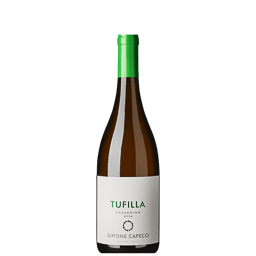
Tufilla · Marche Passerina IGP 2025 (Bio)Simone Capecci, Marche
The Tufilla Marche Passerina is a fine expression of the indigenous Passerina grape variety, which finds its ideal home in the gentle hills of the Marche region. In the glass, it has a delicate straw yellow color with golden reflections and enchants the nose with an elegant aroma of tropical fruits, a hint of chamomile and fine nutty notes. This harmonious aroma lends the wine a special lightness and freshness that impresses from the very first...
€ 10,95 = 14,60 €/L
|
|||||||
|
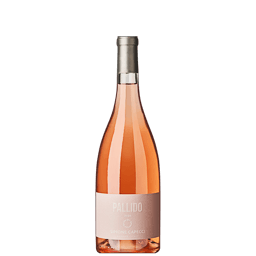
Pallido · Marche Rosato IGT 2025 (Bio)Simone Capecci, Marche
The Pallido Marche Rosato is an elegant, finely balanced rosé made from 100% Montepulciano grapes that reflects the terroir of the Marche region in a particularly charming way. Its delicate pale pink color in the glass already heralds its delicate style, which reveals itself on the nose with aromas of ripe red berries, fresh citrus fruits and a hint of grapefruit. This fruity and refreshing composition of aromas immediately makes you want to take your first...
€ 11,50 = 15,33 €/L
|
|||||||

|
Ciprea · Offida Pecorino DOC 2025 (Bio)Simone Capecci, Marche
The Offida Pecorino Ciprea is the result of years of dedication to the Pecorino grape, an indigenous variety of the Marche region, which is vinified here in its most elegant form. It has a bright straw yellow color in the glass and develops a delicate aroma of exotic fruits such as banana and pineapple, accompanied by floral notes. These aromas continue on the palate, where the wine impresses with its fresh acidity, clear structure and balance between fruit and...
€ 12,50 = 16,67 €/L
|
|||||||
|
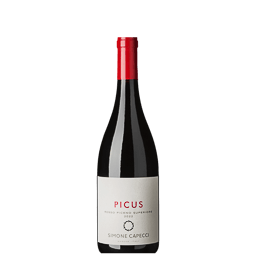
Picus · Rosso Piceno Superiore DOC 2023 (Bio)Simone Capecci, Marche
The Rosso Piceno Superiore Picus - named after the Latin word for great spotted woodpecker - has a deep red color and subtle brightening at the rim. A lively interplay of aromas of ripe cherries, dark plums, sweet cinnamon and a hint of black pepper unfolds on the nose. This multi-layered aroma gives the wine a youthful yet expressive...
€ 13,95 = 18,60 €/L
|
|||||||
|
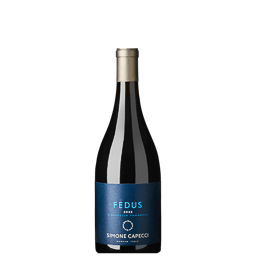
Fedus · Marche Sangiovese IGT 2022 (Bio)Simone Capecci, Marche
The Marche Sangiovese Fedus impresses as a single-varietal Sangiovese with a deep, shimmering violet color and an almost black core. The nose reveals dense aromas of ripe wild berries, complemented by earthy nuances of humus and fine undergrowth. This multi-layered aroma gives the wine a natural depth and authenticity that impressively reflects its...
€ 21,95 = 29,27 €/L
|
|||||||
|
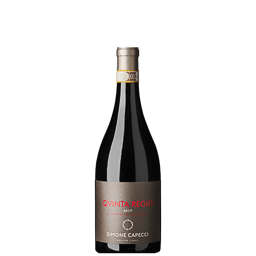
Quinta Regio · Offida Rosso DOC 2017 (Bio)Simone Capecci, Marche
The single-varietal Montepulciano Quinta Regio is a powerful red wine from the Marche region, whose midnight black color already visually announces its intense structure. The complex bouquet reveals aromas of ripe blueberries and rum-pot fruit, finely interwoven with notes of leather, tobacco and a hint of balsamic spice, which lend the wine a striking...
€ 29,95 = 39,93 €/L
|
|||||||

|
Picus · Rosso Piceno Superiore MAGNUM DOC 2021 (Bio)Simone Capecci, Marche
The Rosso Piceno Superiore Picus - named after the Latin word for great spotted woodpecker - has a deep red color and subtle brightening at the rim. A lively interplay of aromas of ripe cherries, dark plums, sweet cinnamon and a hint of black pepper unfolds on the nose. This multi-layered aroma gives the wine a youthful yet expressive...
€ 39,95 = 26,63 €/L
|
|||||||
|
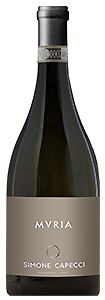
Mvria · Offida Pecorino DOC 2016Simone Capecci, Marche
The Offida Pecorino Mvria has an impressive straw-yellow color with golden reflections and remarkable brilliance. Its high viscosity is evident when swirled in the glass and indicates an exceptional consistency. The nose reveals an intense, complex bouquet with notes of spicy herbs, sage, ripe yellow fruit and a hint of jujube, combining depth and...
€ 49,95 = 66,60 €/L
|
|||||||
|
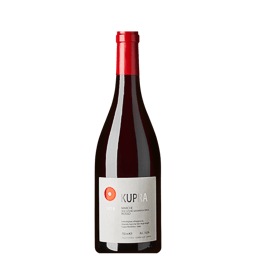
Kupra · Rosso Marche IGT 2016Oasi degli Angeli, Marche
The Kupra comes from around three hectares of centuries-old vines, which are popularly known as 'Lu Bordõ'. The vines, identified as a Grenache type after genetic testing, are also known as Cannonau on the Italian island of Sardinia, where they are believed to have been planted by emigrant Sardinian...
€ 275,00 = 366,67 €/L
|
|||||||

Marche | Wine region | Buy at Gerardo
The Marches turn their backs on Romagna, Tuscany and Umbria and look out to sea. In gently rolling hills, the land slopes down to the coast, and two things, the products of an ancient agriculture and the spoils of fishermen define the cuisine there. Dishes from the coastal strip: Brodetto, for example, that tasty fish soup that the cuoco or cuoca prepares with lots of onions, garlic, parsley, tomatoes, bay leaves and a dash of white vinegar. Or then, determined by the peasant, the majestic pies, the fragrant roast pork, but above all those famous ''maccheroni alla chitarra'' that are the national dish in Abruzzo. There is no farmhouse there where you would not find the chitarra with its iron wires stretched over a wood, over which you lay the thin strips of egg dough. By pressing on these wires, the dough is cut into square cookies, which are then prepared ready for the table with meat sauce and Parmesan cheese. Simple dishes, rich in tradition, which the famous Italian writer Luigi Veronelli considered to be as secure on the tables as the ancient churches in the middle of their villages and the walled villages in turn on the tops of their hills. And if wines are produced here in lesser quantity than elsewhere, they - like Verdicchio - are by no means behind in terms of quality.
Apart from the already mentioned Verdicchio, the most famous wine representatives of the region are the red Rosso Piceno and the white wines made from the rediscovered grape variety Pecorino.
Marche is a region rich in faces, but until today still a piece of 'undiscovered Italy'. This is because their level of awareness is far behind Tuscany and Piedmont due to little marketing activity - the 'Marches' are not yet a 'brand'. The name of the region 'Marche' undoubtedly derives from German, it has been used for individual areas in the past. Its provincial character, especially of the southern Marches, persisted until recent history.At first glance, all the above points are apparent drawbacks, but this has also spared the Marches from some of the unpleasant currents of modern times.
The money of the industrial north has properly plowed up some regions of Italy, such as the Maremma, in southern Tuscany. Entire landscapes have been bought up, transformed, given new vineyards, wineries and cellars. Almost all the well-known giants of the Italian wine scene opened branch wineries there. The consequences were serious (not only) for vineyard prices, because they literally exploded as a result. Moreover, the instant wineries that emerged in this way are not based on a local winemaking tradition - they are pure fads. Because by the Bekanntheitsgrd of a region the factor calculates like desired the vineyards for capitalistic projects are.
In contrast to it the inhabitants of the marks - the Marchegiani - are predominantly rural coined and lead a life in that frugality as large value applies. High flights are foreign to the people here, they prefer the healthy mediocrity. Nevertheless, there is a fear that the acquisition of value real estate could become unaffordable. For young winemakers, this is an important cost factor if they want to acquire or lease one or two additional vineyards. No winery inherently owns only top sites. With a lot of tact must be pre-felt with those who have become too old or frail, whether they would give their vineyards.
Because there are many emotions attached to the old vineyards and in the end it is just not only a question of price. The acquisition of new vineyards and the associated pricing are easily upset by overly fat wallets from Italy's industrial north. This form of money-making is new to the Marche and threatens centuries-old principles. Young winegrowers, who come from local winegrowing families, can easily calculate that with wine there will never be enough money to refinance the new prices of the Marche vineyards.
Unless one belongs to those 'winegrowers' who come to the Marche with various side incomes from industry, pharmacy, insurance or banking. the traditional farms do not have such funds and depend solely on the sale of their products. One quickly notices that, in addition to the long-established winegrowing families, more and more competitors from outside are appearing in the wine business of the brands. A form of competition for whom a vineyard is merely a new investment, and the wine market is a kind of stock exchange - into which you can buy with your checkbook. - Gerardo